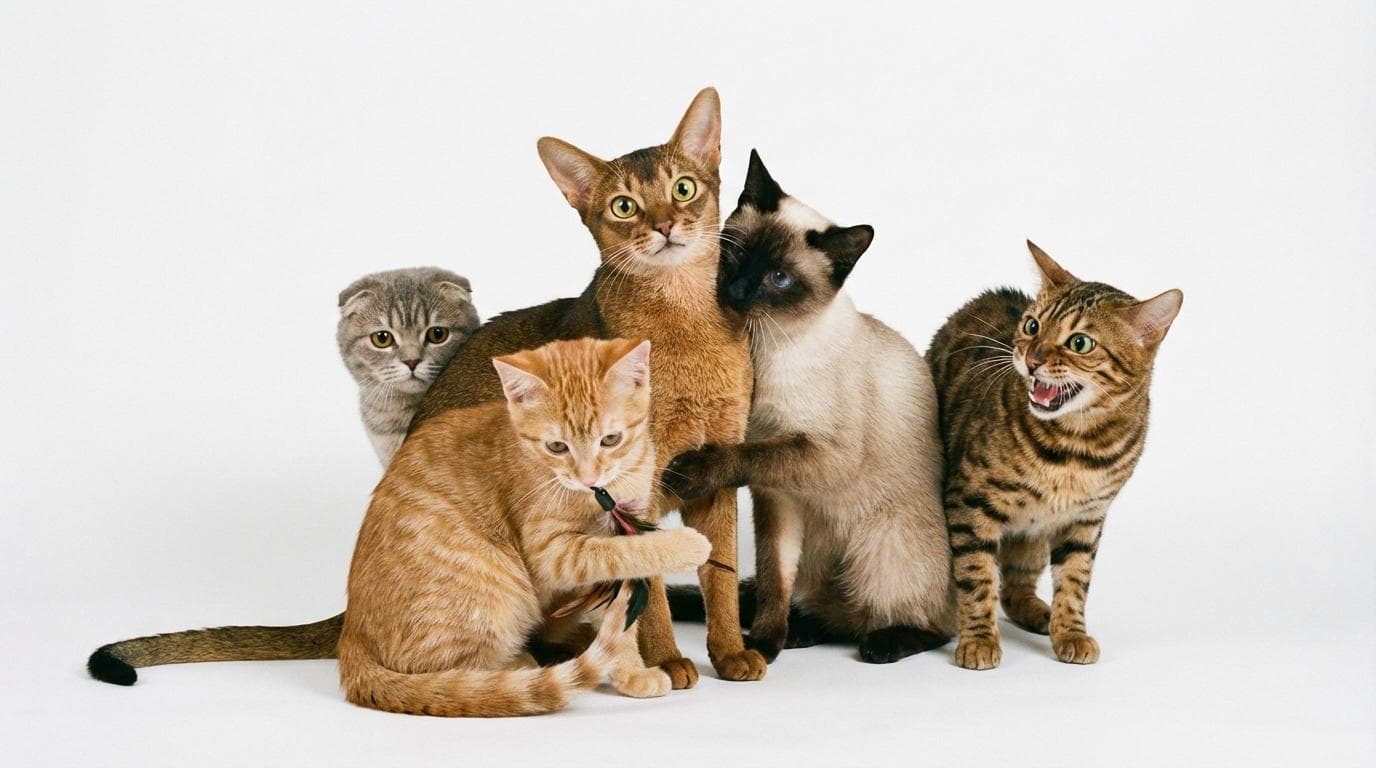
Your cat is constantly talking to you — just not with words. Every tail flick, ear rotation, and slow blink is part of an elaborate communication system that most cat owners never fully learn to read. And when you can't understand what your cat is saying, frustration builds on both sides.
Learning cat body language isn't just a fun party trick. It's the single most important skill you can develop as a cat owner. When you can read your cat's signals accurately, you can prevent bites, reduce stress, build trust, and create a dramatically better relationship.
The Tail: Your Cat's Emotional Barometer
A cat's tail is their most expressive feature. Unlike dogs, where a wagging tail almost always means happiness, cat tail movements are far more nuanced.
Tail Held High
A cat walking toward you with their tail straight up like a flagpole is giving you one of the clearest positive signals in their vocabulary. This means confidence, happiness, and a willingness to interact. If the tip has a slight curve or hook, think of it as a question mark — they're feeling friendly and curious.
Low or Tucked Tail
A tail carried low to the ground or tucked between the legs signals fear, anxiety, or submission. This cat is not feeling safe. If you see this, back off and give them space. Pushing interaction on a cat in this state will only erode trust.
Puffed-Up Tail
The classic Halloween cat silhouette — tail puffed to twice its normal size. This is a fear response designed to make the cat look bigger. Your cat feels threatened and is trying to ward off whatever is scaring them. Common triggers include unfamiliar cats, loud noises, or sudden movements.
Slow Swishing
A slow, deliberate side-to-side swish usually indicates focus and concentration. Your cat has locked onto something — maybe a bird outside the window, maybe a toy, maybe your ankles as you walk past. This is predatory attention.
Fast Twitching or Thrashing
Rapid tail movement is almost always a sign of agitation or overstimulation. If you're petting your cat and their tail starts lashing, stop immediately. This is your warning that a bite or scratch is coming. Many owners miss this signal and then wonder why their cat "attacked out of nowhere."
The Ears: Radar Dishes of Emotion
Cats can rotate their ears 180 degrees independently, and each position communicates something different.
Forward-Facing Ears
Ears pointed forward and slightly outward mean your cat is relaxed, alert, and interested. This is the default "everything is fine" position.
Flattened or Airplane Ears
When ears rotate sideways like airplane wings, your cat is anxious or uncertain. When they flatten completely against the head, your cat is frightened or preparing for a fight. Flat ears are a clear "do not touch" signal.
Rapidly Rotating Ears
Ears that keep swiveling in different directions indicate a cat who is trying to process too much information at once. They're scanning for threats or interesting sounds and may be feeling overwhelmed.
The Eyes: Windows to Their Mood
The Slow Blink
This is the cat equivalent of saying "I love you" or at least "I trust you completely." When your cat looks at you and slowly closes and opens their eyes, they're demonstrating that they feel safe enough to temporarily lose sight of you. You can slow blink back — it's a genuine form of cat-human communication that research has confirmed.
Dilated Pupils
Big, round pupils can mean excitement, fear, or high arousal. Context matters here. Dilated pupils during play mean stimulation. Dilated pupils combined with a tense body mean fear or aggression.
Constricted Pupils
Narrowed, slit-like pupils in normal lighting often indicate tension or aggression. If your cat is staring at something with constricted pupils and a stiff body, they're in a defensive or predatory state.
Direct Stare
In cat language, a prolonged direct stare is a challenge or threat. This is why cats often gravitate toward the one person in the room who doesn't like cats — that person is avoiding eye contact, which cats interpret as polite and non-threatening.
Body Posture: The Full Picture
The Loaf Position
When your cat tucks all four paws under their body and sits like a loaf of bread, they're relaxed but alert. They can spring up quickly if needed, but they're comfortable enough to rest.
Belly Exposure
A cat showing their belly is expressing trust — but unlike dogs, this is NOT an invitation to rub it. Many cats will expose their belly and then bite when you touch it. They're showing you vulnerability, not asking for contact. Some cats do enjoy belly rubs, but approach cautiously and read their other signals.
Arched Back
An arched back with fur standing on end is a fear response. An arched back during petting (the "elevator butt") is a sign of pleasure — they're pushing into your hand for more contact.
Reading Signals in Combination
The key to understanding cat body language is never reading one signal in isolation. A tail swish with forward ears means something completely different from a tail swish with flattened ears. Always look at the whole cat.
This is especially important for cats with the Anxious Homebody archetype. These cats often send mixed signals — approaching for attention but then retreating, purring while their tail twitches, or soliciting pets and then biting. They want connection but feel conflicted about it, and reading their combined body language is essential to building trust.
Why This Matters for Your Cat's Well-Being
Misreading your cat's body language leads to a breakdown in trust. Every time you pet a cat who is signaling they want to be left alone, or ignore a cat who is asking for attention, you're teaching them that communication with you doesn't work.
Over time, this can create behavioral issues — a cat who bites "without warning" (they were warning, you just couldn't read it), a cat who hides constantly, or a cat who seems aloof and disconnected.
Understand Your Cat on a Deeper Level
Body language is just one piece of the puzzle. Every cat has underlying behavioral patterns that shape how they communicate and what they need from you. Take the free cat archetype quiz to discover your cat's unique personality profile and learn exactly how to communicate with them in a way they understand.
When you speak your cat's language, everything changes.