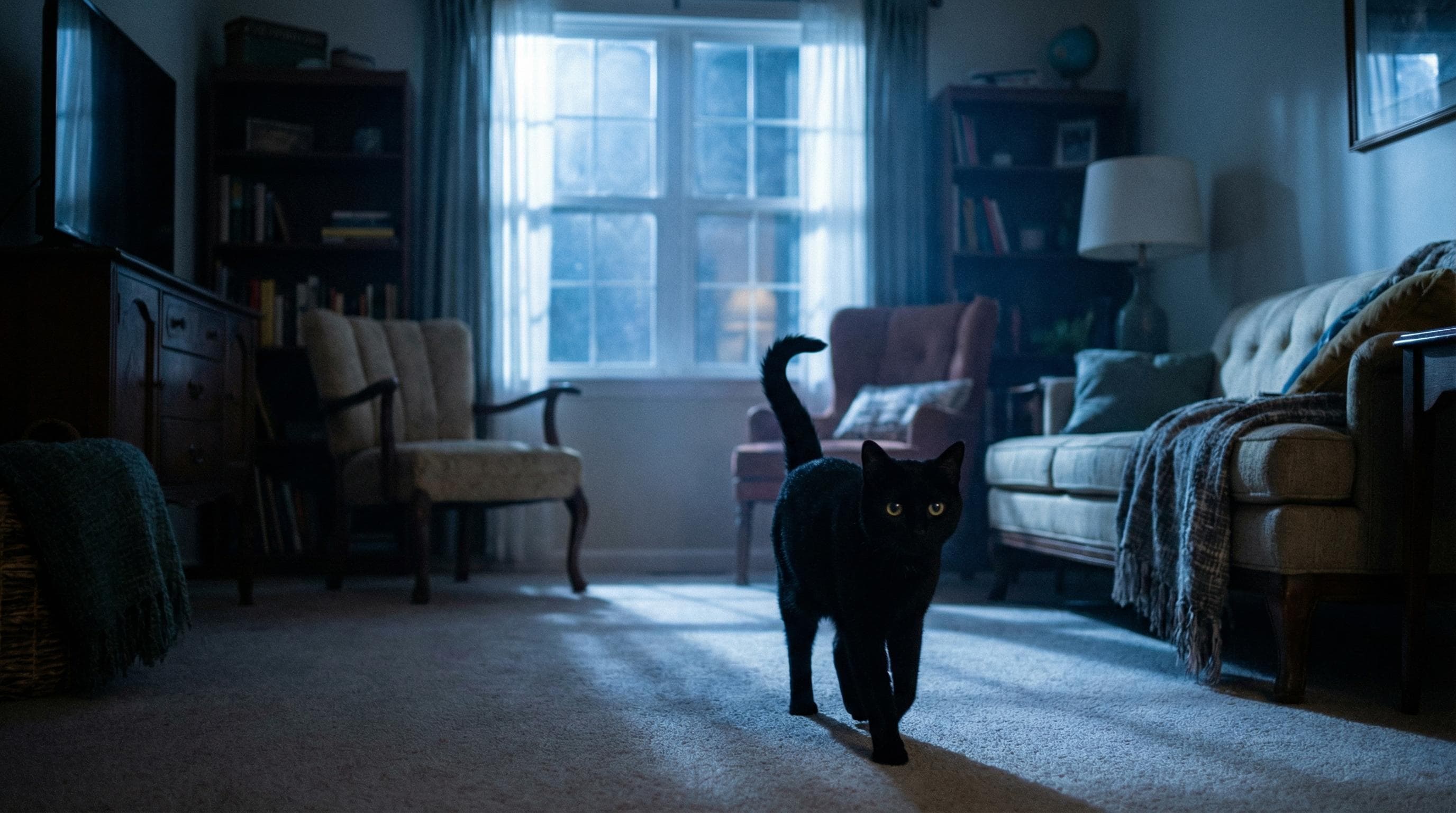
Every night, the same routine: you turn off the lights, climb into bed, and just as you're drifting off, the symphony begins. Meowing at the bedroom door. Thundering paws across the hallway. The sound of something crashing in the kitchen. Your cat has apparently decided that 2 AM is the perfect time to practice parkour.
You're exhausted, frustrated, and probably wondering if there's something wrong with your cat. Good news: there's nothing wrong. Bad news: your cat is doing exactly what their biology tells them to do — at the worst possible time for you.
Cats Aren't Nocturnal — They're Crepuscular
This distinction matters. Truly nocturnal animals (like owls) are active throughout the night. Cats are crepuscular, meaning they're most active during dawn and dusk — the transitional periods between light and dark.
In the wild, dawn and dusk are prime hunting times. Light levels are low enough that cats' superior night vision gives them an advantage over prey, but there's still enough light to see clearly. This is when their ancestors did the bulk of their hunting.
Your domestic cat still carries this internal clock, even though their "prey" is a feather toy and their "hunting grounds" is your living room. Their biology says "go time" right when you're trying to sleep.
Why Indoor Cats Are Worse at Night
Indoor cats often have more intense nighttime activity than outdoor cats, and the reason is simple: they're bored during the day.
Most indoor cats spend their daylight hours sleeping. Not because they need 16 hours of sleep, but because there's nothing else to do. They've inspected every corner of the house, the toys haven't changed in weeks, and you're at work. So they sleep all day and then have a massive energy surplus when their biological activity window opens.
This is particularly pronounced in Wild at Heart cats — those with strong hunting instincts, high energy levels, and an intense drive for exploration and stimulation. These cats need significantly more engagement than the average indoor cat, and when they don't get it, nighttime becomes their outlet.
Common Nighttime Behaviors and What They Mean
Meowing at Your Bedroom Door
Your cat wants something — food, attention, play, or access to you. If you've ever gotten up to respond, you've taught them that persistent meowing works.
Running and Jumping
This is usually pent-up energy being released. If your cat is doing laps, they didn't get enough physical activity during the day.
Hunting Behavior
Attacking your feet under the blankets, pouncing on shadows, or stalking invisible prey — these are hunting instincts activated by the low-light conditions they're biologically primed for.
Knocking Things Over
Often a combination of boredom, exploration, and the knowledge that this particular action gets your attention.
Excessive Grooming or Restlessness
If your cat seems agitated rather than playful at night, this could indicate anxiety or an underlying health issue.
Proven Strategies for Peaceful Nights
Restructure Their Day
The goal is to shift your cat's energy expenditure to align with your schedule. This means making daytime more interesting and nighttime boring.
Morning play session: 10 to 15 minutes of vigorous interactive play before you leave for work. Get them running, jumping, and catching.
Daytime enrichment: Window perches with bird feeder views, puzzle feeders with their daytime food ration, rotating toys, and cat TV (leave a nature video playing on a tablet).
Evening play session: This is the most important one. About one hour before your bedtime, play intensively for 15 to 20 minutes. Use wand toys that let them stalk, chase, and pounce. Really tire them out.
The Hunt-Eat-Groom-Sleep Cycle
After the evening play session, feed your cat their dinner or a substantial snack. In the wild, the sequence is always hunt, eat, groom, sleep. By mimicking this, you're triggering your cat's natural post-meal drowsiness.
Automatic Feeders
If your cat wakes you up for food, an automatic feeder set for early morning can be transformative. Your cat learns to associate food with the machine, not with waking you up.
Keep a Consistent Schedule
Cats are creatures of habit. Feed, play, and interact at the same times every day. Their internal clock will adjust to your routine over time.
Don't Respond to Nighttime Meowing
This is hard but essential. If your cat meows at the door and you eventually get up — even after 30 minutes — you've just taught them that 30 minutes of meowing works. You need to not respond at all. It will get worse before it gets better (this is called an "extinction burst"), but consistency is key.
Provide Nighttime Activities
You can't play with your cat at 3 AM, but you can set up self-play options:
- Puzzle feeders with a portion of their daily food
- Battery-operated toys that move on their own
- Crinkle balls and lightweight toys they can bat around
- A cat wheel (yes, these exist and some cats love them)
Close or Open the Bedroom Door — Pick One
If you let your cat in the bedroom some nights and not others, you're creating inconsistency that drives more meowing. Either always let them in (and accept some disruption) or never let them in (and endure the initial protest).
When to See a Vet
Sudden changes in nighttime behavior — especially in older cats — can indicate medical issues:
- Hyperthyroidism (increased activity, vocalization, appetite)
- Cognitive dysfunction in senior cats (disorientation, yowling)
- Pain (restlessness, inability to settle)
- Vision or hearing loss (increased vocalization, seeming confused)
Work With Their Nature, Not Against It
You'll never completely eliminate your cat's crepuscular instincts, and you shouldn't try to. The goal is to manage their energy so that their natural active periods are less disruptive to your life.
The most effective approach depends on understanding your specific cat's behavioral drivers. A high-energy hunting type needs different interventions than an anxious cat who cries at night because they want reassurance.
Take the free cat archetype quiz to discover your cat's unique behavioral profile and get a personalized nighttime management plan that actually addresses the root cause of their midnight antics.