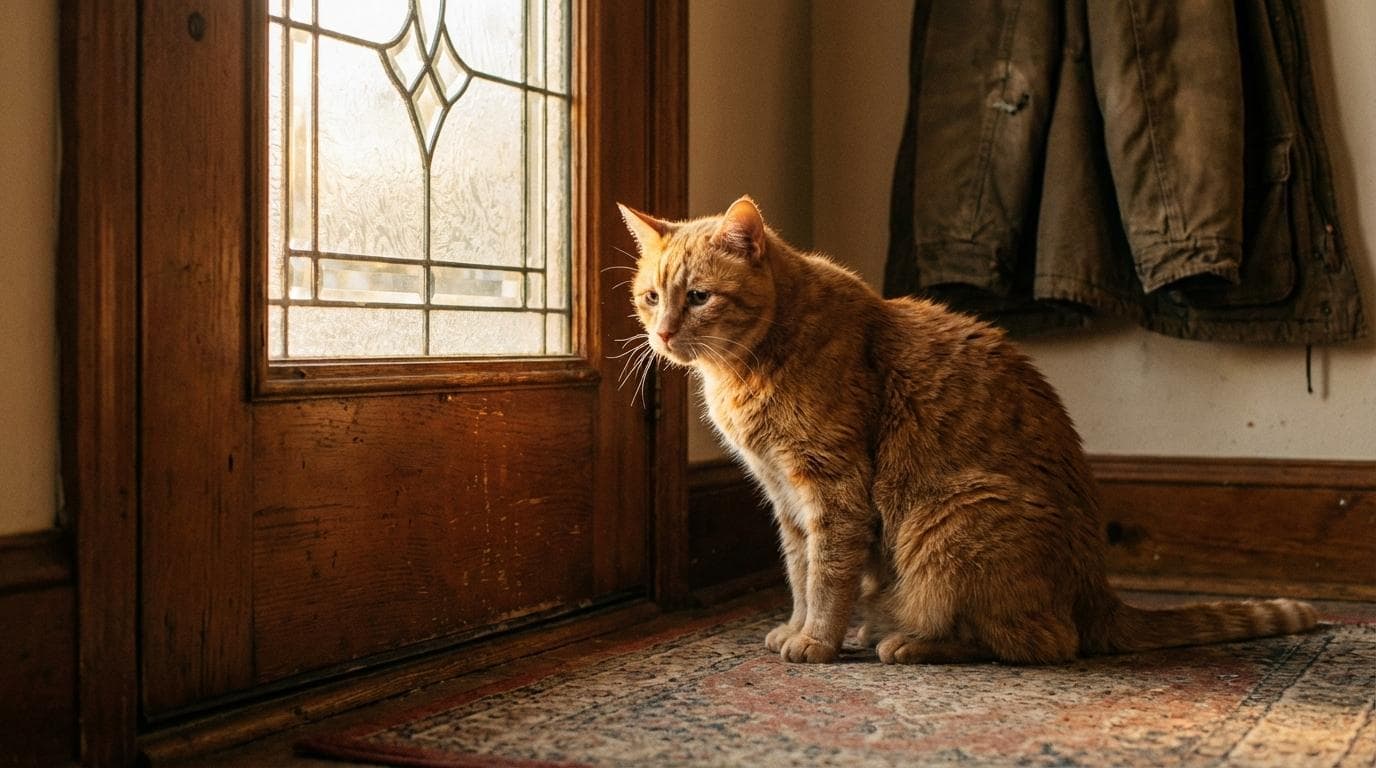
There's a persistent myth that cats are independent creatures who couldn't care less whether you're home or not. This myth has caused a lot of suffering, because cats can and do develop genuine separation anxiety — and because so many people believe cats "don't get attached," the signs are frequently missed.
If your cat follows you from room to room, meows excessively when you leave, destroys things while you're gone, or has litter box accidents only when you're away, you're not imagining things. Your cat may have separation anxiety, and it's a real condition that deserves real solutions.
Signs of Cat Separation Anxiety
Separation anxiety in cats can look different from dogs. Cats are subtle, and their distress signals are often misinterpreted as other behavioral problems.
While You're Away
- Excessive vocalization (meowing, yowling, crying) — neighbors may report this
- Destructive behavior: scratching doors, knocking things over, shredding items
- Inappropriate elimination: urinating or defecating outside the litter box, often on your bed or clothes (items that smell like you)
- Over-grooming to the point of creating bald patches
- Not eating while you're gone, even if food is available
- Vomiting (stress-induced)
When You're Home
- Following you everywhere, including the bathroom
- Demanding constant physical contact
- Becoming agitated when you get ready to leave (they learn the signs — keys, shoes, jacket)
- Excessive greeting behavior when you return
- Trying to block you from leaving
The Key Distinction
The defining feature of separation anxiety is that the behavior happens specifically in response to your absence (or anticipated absence). A cat who scratches furniture regardless of whether you're home has a scratching issue, not separation anxiety. A cat who only scratches the door when you leave — that's separation anxiety.
Causes of Cat Separation Anxiety
Early Life Experience
Kittens who were weaned too early, orphaned, or bottle-raised are more prone to separation anxiety. They missed critical socialization with their mother and siblings that teaches self-soothing and independence.
Changes in Routine
A major trigger is a sudden change in your schedule. If you worked from home and now go back to an office, or if a family member moves out, the sudden reduction in human contact can trigger anxiety.
Single-Cat Households
Cats who are the only pet and whose owner is their sole source of social interaction are more vulnerable. All their attachment is focused on one person.
Past Trauma
Cats who have been abandoned, rehomed multiple times, or spent long periods in shelters may develop anxiety about being left again.
Personality
Some cats are simply more attachment-prone than others. The Velcro Shadow archetype describes cats who bond intensely with their person and derive their sense of security primarily from that relationship rather than from their environment.
The Velcro Shadow Pattern
Cats with the Velcro Shadow archetype don't just like being near you — they need it. Their entire stress-regulation system is built around your presence. When you leave, they don't just miss you; they lose their primary source of safety.
Characteristics of Velcro Shadow cats:
- They choose to be in whatever room you're in, always
- They sleep on you or pressed against you, not just near you
- They become genuinely distressed, not just disappointed, when you leave
- They may be indifferent to or wary of other people — it's specifically you they're attached to
- They groom you, knead on you, and seek constant physical contact
How to Help a Cat With Separation Anxiety
Build Independence Gradually
Start by creating small separations while you're home. Close a door between you and your cat for 30 seconds, then open it. Gradually increase the duration. Reward your cat for staying calm during separations.
Create a Stimulating Environment
A cat whose environment is boring has nothing to distract them from your absence. Provide:
- Window perches with views of outdoor activity
- Puzzle feeders that release food over time
- Rotating toy selection
- Cat TV (videos of birds and fish) left on while you're away
- A cat tree in a central location
Leave Comfort Items
Leave a worn t-shirt or blanket that smells like you in your cat's favorite spot. Your scent provides comfort and can reduce anxiety during your absence.
Don't Make a Big Deal of Departures and Returns
The biggest mistake anxious cat owners make is long, dramatic goodbyes and enthusiastic greetings. This reinforces the idea that your departure is a significant, stressful event.
Instead, leave casually and return casually. Wait a few minutes after coming home before giving your cat attention. This teaches them that your comings and goings are normal, boring, non-events.
Establish a Departure Routine
Give your cat a puzzle feeder or treat-dispensing toy right before you leave. This creates a positive association with your departure and gives them something to focus on during the vulnerable first few minutes.
Consider Pheromone Support
Feliway diffusers release synthetic calming pheromones that can reduce anxiety. Place one near your cat's favorite resting spot and near the door you leave through.
Medication
In severe cases, veterinary-prescribed anti-anxiety medication can help while you work on behavioral modification. This isn't a failure — some cats have anxiety levels that can't be managed through environmental changes alone.
What NOT to Do
- Don't punish your cat for separation-related behaviors — they're already anxious, and punishment makes it worse
- Don't get a second cat specifically to "fix" separation anxiety — if the bond is to you, another cat won't replace that
- Don't ignore the problem hoping it resolves — untreated separation anxiety typically gets worse over time
- Don't assume your cat will "get over it" — they need your help
Understanding the Full Picture
Separation anxiety rarely exists in isolation. It's usually connected to your cat's broader personality patterns, attachment style, and stress responses. A comprehensive understanding of your cat's behavioral profile helps you address not just the anxiety, but the underlying needs driving it.
Take the free cat archetype quiz to discover your cat's unique behavioral archetype and get personalized strategies for building their confidence and independence — without breaking the bond you share.