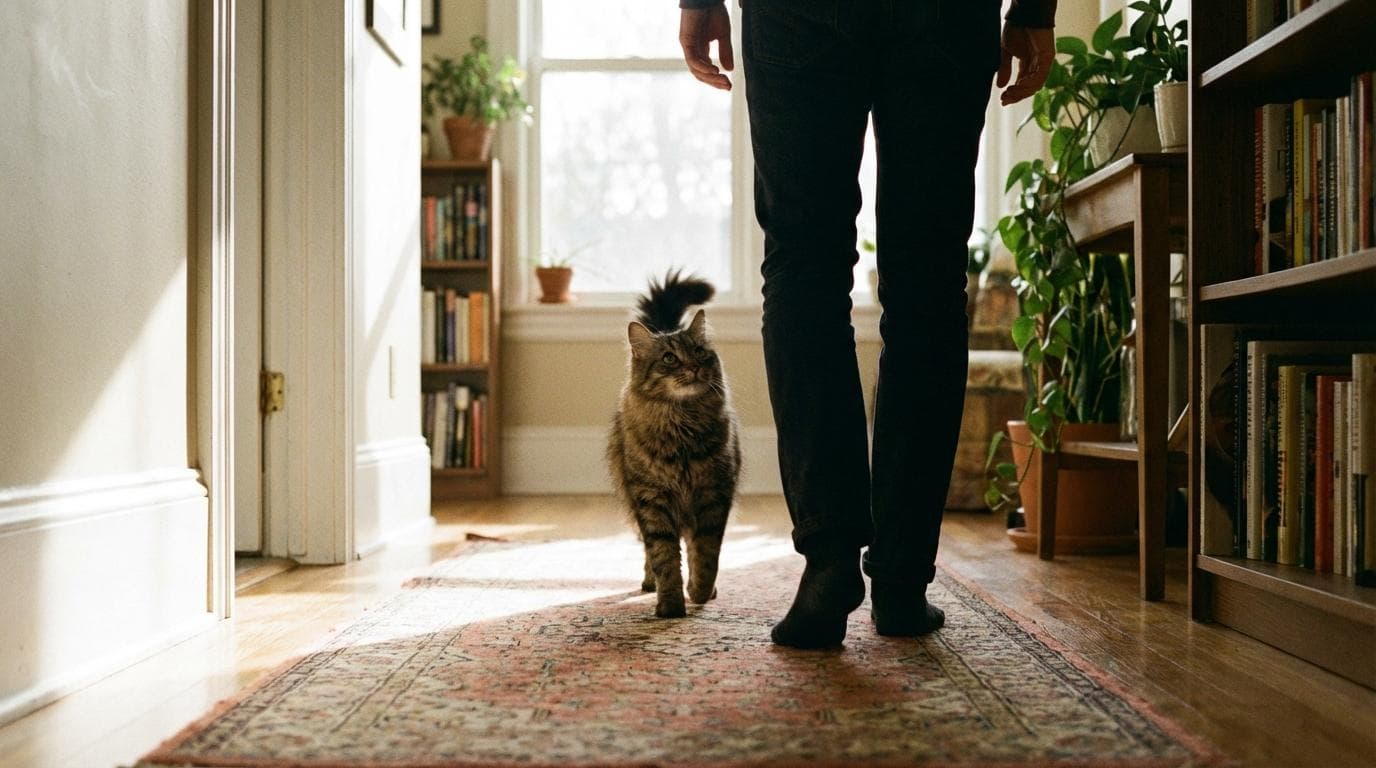
It's 3 AM. You're deep in sleep when suddenly you hear what sounds like a herd of elephants stampeding through your living room. Your cat is doing laps at full speed — over the couch, across the counter, down the hallway, up the cat tree, and back again. Two minutes later, they're sitting calmly, grooming themselves as if nothing happened.
Welcome to the zoomies. Officially called Frenetic Random Activity Periods (FRAPs), these bursts of explosive energy are one of the most entertaining — and sometimes most disruptive — cat behaviors. Here's what's actually going on.
What Are Cat Zoomies?
Zoomies are sudden, intense bursts of energy where your cat runs, leaps, and plays at maximum speed for a short period, usually 1 to 5 minutes. They can happen at any time but are most common at dawn, dusk, and the middle of the night.
During a zoomie episode, you might see:
- Sprint laps around the house
- Leaping onto and off of furniture
- Dilated pupils and a wild expression
- Sideways hopping or "crab walking"
- Attacking invisible prey
- Sudden stops followed by more sprinting
- Tail puffed or twitching
Why Do Cats Get the Zoomies?
Pent-Up Energy
This is the number one reason. Cats are designed to spend their energy in short, intense bursts — stalk, chase, pounce, kill, eat, sleep. Indoor cats who don't get enough interactive play accumulate energy that has to go somewhere. The zoomies are that energy exploding out.
Crepuscular Nature
Cats are crepuscular, meaning they're most active at dawn and dusk. This is when their wild ancestors did most of their hunting. Your cat's 5 AM sprint through the house isn't random — it's their internal clock saying "hunting time."
Post-Bathroom Energy
Many cats get zoomies right after using the litter box. There are several theories: relief after elimination, an instinct to put distance between themselves and their waste (which could attract predators in the wild), or stimulation of the vagus nerve during elimination.
Overstimulation
Some cats get zoomies when they've experienced too much stimulation — petting, playing, watching birds — and need to discharge the resulting arousal. This is especially common in Overstimulated Hunter types, who process environmental input more intensely than other cats.
Kitten and Young Cat Energy
Kittens and young cats (under 3 years) get zoomies more frequently simply because they have more energy. This usually decreases with age, though some cats keep their zoomie tendencies well into their senior years.
When Zoomies Are a Problem
Occasional zoomies are completely normal and even healthy. But excessive or disruptive zoomies can signal an issue.
Signs the Zoomies Have Gone Too Far
- They happen multiple times per night and disrupt your sleep consistently
- They're accompanied by destructive behavior (knocking things over, scratching furniture)
- Your cat seems distressed during episodes rather than playful
- Zoomies are followed by aggression toward you or other pets
- The frequency is increasing over time
- They're accompanied by excessive vocalization
Could It Be Medical?
In rare cases, sudden onset of frantic running can be related to:
- Feline hyperesthesia syndrome (skin rippling, tail chasing)
- Hyperthyroidism (especially in older cats)
- Fleas or skin irritation
- Pain (running to escape discomfort)
How to Manage the Zoomies
Structured Evening Play Sessions
The single most effective strategy. Schedule a vigorous play session about an hour before your bedtime. Use wand toys, laser pointers (always end with a physical toy to catch), or feather toys. Play for 15 to 20 minutes, mimicking the hunt cycle — stalk, chase, pounce, catch.
Feed After Playing
After the play session, give your cat their evening meal or a substantial treat. In the wild, the cycle is hunt-catch-eat-groom-sleep. By mimicking this, you're setting your cat up to wind down naturally.
Puzzle Feeders Before Bed
Leaving a puzzle feeder with kibble gives your cat something to do during their natural active periods without disturbing you. It's quiet, it's engaging, and it channels hunting energy productively.
Daytime Enrichment
A cat who sleeps all day because there's nothing to do will have surplus energy at night. Provide daytime stimulation: window perches, bird feeder views, rotating toys, and if possible, a midday play session.
Second Cat Considerations
Some people suggest getting a second cat as a zoomie solution. This can work if both cats are compatible and play well together, but it can also double the chaos. A second cat is a 15-plus-year commitment — don't do it solely to manage one behavioral issue.
What NOT to Do
- Don't lock your cat in a small room — this increases frustration
- Don't yell or spray water — this creates fear without solving the energy problem
- Don't give up and just accept destroyed sleep — there are real solutions
The Overstimulated Hunter Connection
Cats who get frequent, intense zoomies often fit the Overstimulated Hunter archetype. These cats have:
- Higher-than-average prey drive
- Intense responses to environmental stimulation
- Difficulty self-regulating their arousal levels
- A need for more structured activity than the average cat
Find Your Cat's Unique Solution
The right approach to managing zoomies depends entirely on why your cat is getting them — and that depends on their underlying behavioral profile. A bored cat needs different interventions than an overstimulated one.
Take the free cat archetype quiz to discover your cat's behavioral type and get a personalized plan for channeling their energy in ways that work for both of you. No more 3 AM stampedes.