Living with an anxious cat is exhausting — for both of you. You watch your cat startle at every noise, hide when anyone visits, and live in a constant state of tension. You've tried everything you can think of, and nothing seems to help. Worst of all, you can see that your cat is suffering, and you feel helpless.
The good news: cat anxiety is treatable. Not with a magic pill or a single trick, but with a comprehensive approach that addresses the environment, the routine, and the relationship. Let's break it down.
Understanding Cat Anxiety
Anxiety in cats isn't dramatic worry like humans experience. It's a persistent state of heightened alertness where the cat's nervous system is stuck in "threat detection mode." They can't relax because their brain is constantly scanning for danger, even when there is none.
This isn't a choice. Anxious cats aren't being difficult. Their brain chemistry is wired for caution, and without intervention, that wiring gets reinforced every time they perceive a threat and react to it.
Signs of chronic anxiety:
- Hiding excessively
- Startling easily
- Aggression when cornered or surprised
- Inappropriate elimination
- Over-grooming
- Loss of appetite or eating too fast
- Hypervigilance (always watching, never fully relaxed)
- Reluctance to explore or play
- Avoiding certain rooms or areas
- Clinging to one person and avoiding everyone else
Environmental Modifications
The single most impactful thing you can do for an anxious cat is modify their environment. This isn't about buying expensive products — it's about understanding how cats use space.
Safe Spaces
Anxious cats need places where they feel completely secure. These spaces should be:
- Enclosed on three sides (caves, covered beds, boxes)
- Elevated when possible (cats feel safer up high)
- Located in quiet areas away from high traffic
- Always accessible (never blocked or disturbed)
- Multiple options in different rooms
Vertical Territory
Cats who feel insecure on the ground often feel confident up high. Cat trees, wall-mounted shelves, and high perches give anxious cats a vantage point where they can observe without being accessible. This single change transforms some anxious cats almost overnight.
Escape Routes
An anxious cat should never feel trapped. Arrange furniture so there are always multiple exit paths from any location. In multi-cat households, ensure that the anxious cat can't be cornered or blocked from resources.
Reduce Visual Stress
If outdoor cats are visible through windows, this can be a major stress source. Consider window films, closing blinds on problem windows, or using furniture to block the view from ground-level windows.
Routine and Predictability
Anxious cats rely heavily on routine. Predictability makes the world feel safer because they know what comes next.
Feed at Consistent Times
Same times, same places, same bowls. This sounds trivial, but for an anxious cat, knowing when food appears eliminates one source of uncertainty.
Play at Scheduled Times
Regular play sessions don't just burn energy — they give your cat a positive, predictable event to look forward to. Start with gentle play that doesn't overwhelm, and gradually increase intensity as their confidence grows.
Minimize Surprises
Whenever possible, prepare your cat for changes. If guests are coming, create a safe room where your cat can retreat before the guests arrive. If you're rearranging furniture, do it gradually.
Building Trust
The relationship between you and your anxious cat is the foundation of their recovery. Building trust takes time and consistency.
Let Them Come to You
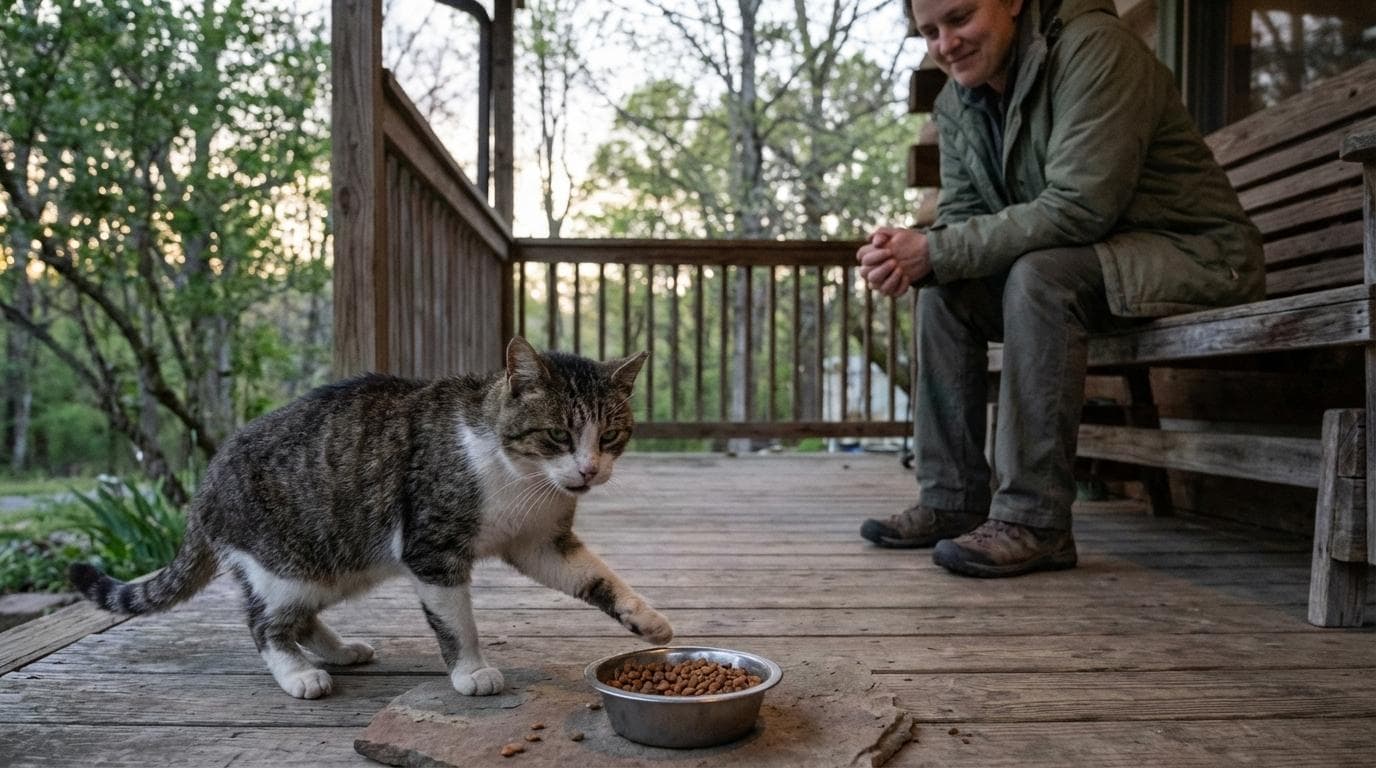
The hardest rule for cat lovers: don't pursue your anxious cat. Sit on the floor, make yourself small, and let them approach on their terms. Reward approaches with treats or quiet praise.
Slow Blinks
Make eye contact and slowly close and open your eyes. This is cat language for "I'm not a threat." Many anxious cats respond to slow blinks by relaxing or approaching.
Respect Their Signals
When your cat shows discomfort (ears back, body tense, moving away), respect it immediately. Every time you respect a "no," you teach your cat that their communication works and that you're safe.
Avoid Forced Interactions
Picking up, restraining, or cornering an anxious cat erases trust progress. Even well-intentioned cuddling, if the cat doesn't want it, is a setback.
Pheromone Support
Feline facial pheromone products (Feliway Classic) release synthetic versions of the calming pheromone cats deposit when they rub their cheeks on objects. Research shows mixed but generally positive results for reducing anxiety-related behaviors.
Place diffusers near safe spaces, in main living areas, and near the litter box. Give them at least two weeks to show effects.
Supplements and Diet
Several supplements have evidence supporting their use for cat anxiety:
- L-theanine: An amino acid found in green tea that promotes relaxation without sedation
- Alpha-casozepine: A milk protein derivative with anxiety-reducing properties (the active ingredient in Zylkene)
- Tryptophan: A precursor to serotonin that can improve mood
Medication
For moderate to severe anxiety, veterinary-prescribed medication can be essential. Common options include:
- Fluoxetine (Prozac): Daily SSRI for chronic anxiety
- Gabapentin: Useful for situational anxiety (vet visits, travel)
- Buspirone: Anti-anxiety medication with fewer side effects than some alternatives
What NOT to Do
- Don't punish anxious behavior. Punishment increases anxiety. Always.
- Don't flood them with exposure. Forcing an anxious cat to face their fears without control over escape creates more trauma.
- Don't expect overnight results. Anxiety management is measured in weeks and months, not days.
- Don't compare to other cats. "My last cat wasn't like this" isn't helpful. This cat is this cat.
- Don't give up. Anxious cats can make tremendous progress with patience and the right approach.
The Long Game
Managing cat anxiety isn't a quick fix — it's an ongoing commitment to creating an environment where your cat can gradually learn that the world is safe. Some cats become significantly less anxious over months. Others always retain some anxiety but learn to manage it.
The key is understanding YOUR cat's specific anxiety triggers, thresholds, and coping mechanisms. Generic advice only gets you so far.
Take the free cat archetype quiz to identify your cat's behavioral profile and get a personalized anxiety management plan tailored to their specific needs and personality. Your cat deserves to feel safe in their own home — and with the right approach, they can.