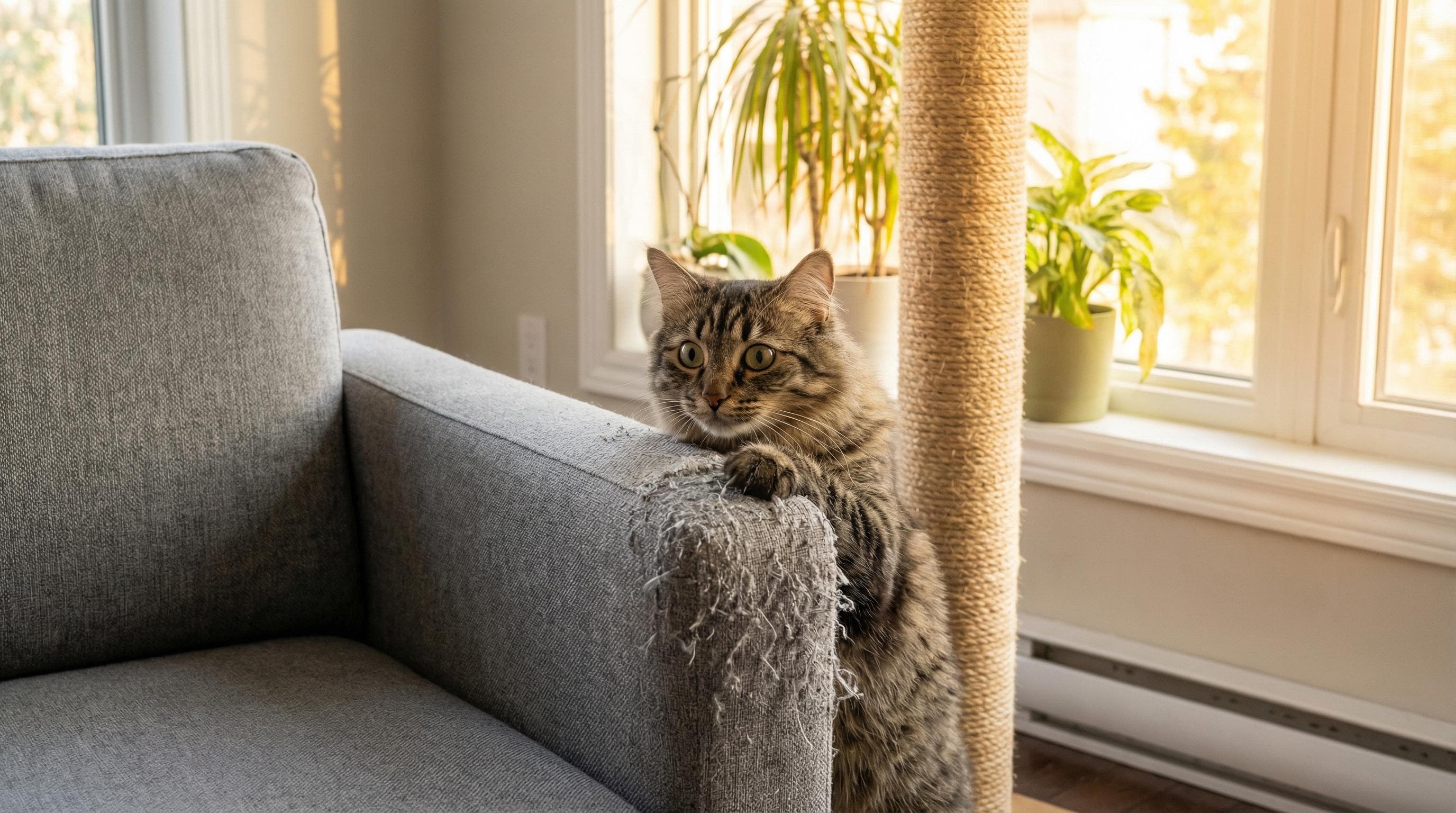
Your brand new couch has claw marks down the side. Your curtains are shredded. The corner of your wooden doorframe looks like it survived a bear attack. You love your cat, but you're at the end of your rope with the scratching.
Before you start researching declawing or rehoming, take a breath. Scratching is one of the most natural and essential cat behaviors, and once you understand why they do it, redirecting it becomes surprisingly straightforward.
Why Cats Scratch: It's Not What You Think
Scratching isn't random destruction. It serves multiple critical functions for your cat.
Territory Marking
Cats have scent glands in their paw pads. When they scratch a surface, they're depositing their scent and leaving a visual marker that says "this is mine." Scratching is essentially your cat's way of posting a sign on their territory.
This is why cats often scratch near doors, windows, and main living areas — they're marking the boundaries and high-traffic zones of their territory. Cats with the Territorial Guardian archetype are especially driven to scratch prominent surfaces because territory ownership is central to their sense of security.
Claw Maintenance
Scratching removes the dead outer sheath of the claw, revealing a sharp new surface underneath. It's essentially a manicure. Without appropriate scratching surfaces, dead claw sheaths build up, which can be uncomfortable and even lead to ingrown claws.
Stretching and Exercise
Watch your cat scratch — they extend their entire body, stretching their shoulders, legs, and paws. Scratching is a full-body workout that keeps muscles toned and joints flexible. This is why cats often scratch right after waking up from a nap.
Stress Relief
Scratching releases feel-good hormones. When your cat is anxious, frustrated, or overstimulated, scratching helps them self-soothe. If you notice increased scratching during stressful times (visitors, new pets, changes in routine), this is your cat coping.
Why Declawing Is Not the Answer
Declawing (onychectomy) is not a simple nail removal. It's the amputation of the last bone of each toe — the equivalent of cutting off your fingers at the last knuckle. It's banned in many countries for good reason.
Consequences of Declawing
- Chronic pain that can last the rest of their life
- Altered gait leading to arthritis
- Increased biting behavior (their primary defense is gone)
- Litter box avoidance (digging becomes painful)
- Behavioral problems from chronic stress and pain
- Higher rates of back pain from compensating for altered foot mechanics
Proven Strategies to Redirect Scratching
Step 1: Provide the Right Scratching Surfaces
Most furniture scratching happens because your cat doesn't have a satisfying alternative. The key word is "satisfying" — a flimsy, wobbly scratching post buried in a corner isn't going to cut it.
What makes a good scratcher:
- Tall enough for full-body stretching (at least 32 inches for vertical posts)
- Stable and doesn't wobble or tip (heavy base or wall-mounted)
- Made from materials cats prefer: sisal rope, corrugated cardboard, or natural wood
- Placed where your cat actually spends time, not hidden in a back room
Step 2: Strategic Placement
Place scratching posts right next to the furniture your cat is currently targeting. They've chosen that spot for a reason — it's in their territory, it's visible, and it's accessible. Once they're consistently using the post instead of the furniture, you can gradually move it to a location you prefer.
Also place scratchers:
- Near sleeping areas (cats scratch after waking)
- Near entry points (doors, windows)
- In main living spaces (not hidden corners)
Step 3: Make Furniture Less Appealing
While redirecting, make the targeted furniture temporarily less attractive:
- Apply double-sided tape (cats hate the sticky feeling on their paws)
- Use aluminum foil on the scratched areas
- Apply a citrus-scented spray (most cats dislike citrus)
- Cover targeted areas with a tightly tucked blanket or furniture protector
Step 4: Reward Good Scratching
When your cat uses the scratching post, praise them, offer a treat, or play with them nearby. Positive reinforcement is far more effective than punishment. You can also rub catnip on the scratcher to make it more enticing.
Step 5: Never Punish Scratching
Spraying your cat with water, yelling, or pushing them away from furniture doesn't teach them where TO scratch — it just teaches them to fear you. Punished cats don't stop scratching; they just do it when you're not watching.
Nail Trimming and Claw Caps
Regular nail trimming (every 2 to 3 weeks) reduces the damage from scratching without eliminating the behavior. Start slowly — trim one or two nails per session if your cat is resistant, and pair it with treats.
Soft claw caps (like Soft Paws) are vinyl covers that glue onto your cat's nails and fall off naturally as the nail grows. They prevent damage without affecting your cat's ability to scratch, stretch, and retract their claws.
When Scratching Signals a Bigger Issue
Excessive or destructive scratching can sometimes indicate:
- Territorial insecurity (new pets, new people, changes in environment)
- Anxiety or stress
- Insufficient environmental enrichment
- A need for more territory (vertical space, hiding spots)
Get to the Root of the Behavior
Scratching is just one expression of your cat's underlying behavioral drives. Understanding their full personality profile helps you address not just the scratching, but every behavioral challenge you face together.
Take the free cat archetype quiz to discover your cat's unique behavioral profile and get a personalized plan that works with their instincts instead of against them.