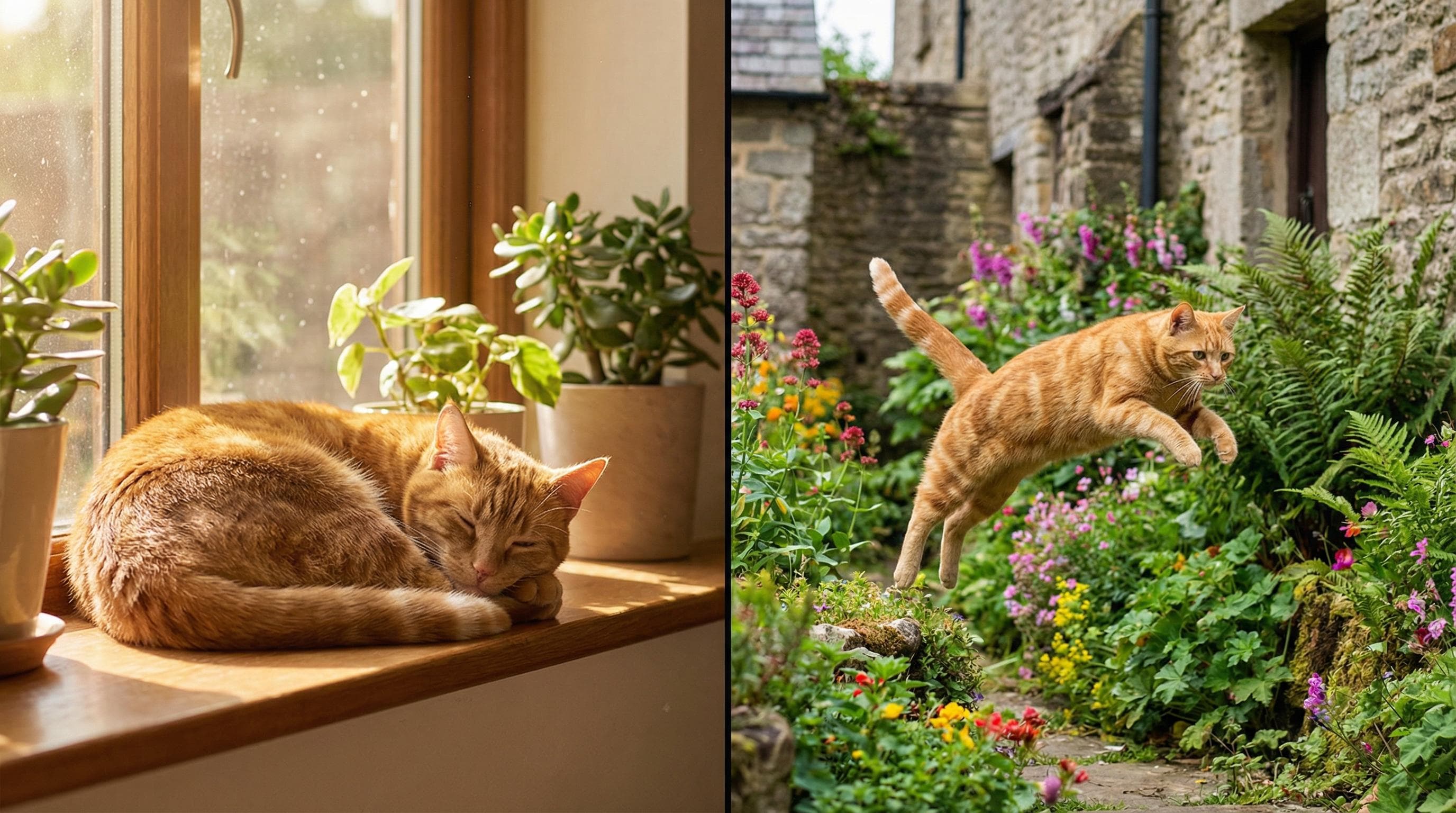
It's one of the most heated debates in the cat world: should your cat go outside? Outdoor cat advocates say it's cruel to keep a natural hunter confined. Indoor cat advocates point to the dramatically shorter lifespan of outdoor cats. The truth, as usual, is more complicated.
This isn't about judging your choices. It's about understanding your specific cat's needs and making an informed decision that keeps them safe and fulfilled.
The Case for Keeping Cats Indoors
The statistics on outdoor cat safety are hard to argue with. Indoor cats live an average of 12 to 18 years. Outdoor cats average 2 to 5 years. That gap isn't small — it's enormous.
Real Risks of Outdoor Access
- Traffic: The leading cause of death for outdoor cats. Even in quiet neighborhoods, cars are a constant threat.
- Predators: Depending on your area — coyotes, foxes, birds of prey, and even other cats.
- Disease: FIV, FeLV, and other infectious diseases spread through cat fights and shared territory.
- Parasites: Fleas, ticks, and intestinal worms are nearly unavoidable for outdoor cats.
- Toxins: Antifreeze, pesticides, poisonous plants, and rodenticides are all common outdoor hazards.
- Human danger: Sadly, outdoor cats face risks from people who don't want them in their yards.
Environmental Impact
Outdoor cats are responsible for billions of bird and small mammal deaths annually. Even well-fed cats hunt — it's instinct, not hunger. If you care about local wildlife, keeping your cat indoors is the most impactful thing you can do.
The Case for Outdoor Access
Here's where it gets nuanced. Some cats genuinely struggle with indoor-only life, and pretending otherwise doesn't help anyone.
What Outdoor Access Provides
- Sensory stimulation: Fresh air, wind, sun, grass, dirt — the full sensory spectrum that indoor environments can't replicate.
- Hunting opportunities: Even supervised outdoor time lets cats engage their predatory instincts more fully.
- Territory: Cats are territorial animals, and outdoor access dramatically expands their perceived territory.
- Physical exercise: Nothing matches the intensity of outdoor exploration for keeping cats physically fit.
- Mental stimulation: The ever-changing outdoor environment provides constant novelty.
The Compromise: Safe Outdoor Options
You don't have to choose between complete confinement and free roaming. Several middle-ground options exist.
Catios (Enclosed Outdoor Spaces)
A catio is an enclosed patio or porch that gives your cat outdoor access without the risks. They range from simple window boxes to elaborate custom builds. Your cat gets fresh air, sunshine, birds to watch, and grass to sniff — all without being able to wander into traffic.
Harness Training
Yes, you can walk a cat on a harness. It takes patience and training, but many cats learn to enjoy supervised outdoor walks. Start indoors, let them get comfortable with the harness over several days, and then gradually introduce the outdoors.
Supervised Garden Time
If you have a fenced yard, supervised outdoor sessions can give your cat a taste of nature. Stay with them, keep sessions short at first, and always bring them back inside before they decide to test the fence.
Making Indoor Life Fulfilling
If you're keeping your cat indoors — and for most cat owners, this is the safest choice — your job is to make that indoor environment as enriching as possible. A bored indoor cat will develop behavioral problems guaranteed.
Vertical Space
Cats need to climb. Cat trees, wall-mounted shelves, and high perches give your cat the vertical territory they crave. Aim for at least one tall climbing structure in your main living area.
Window Entertainment
A window perch with a view of bird feeders or outdoor activity can provide hours of stimulation. Some owners set up "cat TV" with bird feeders positioned right outside the window.
Rotation of Toys
Don't leave all your cat's toys out at once. Rotate them weekly so there's always something "new" to discover. Novelty is key to preventing boredom.
Structured Play Sessions
Two daily interactive play sessions of 10 to 15 minutes each using wand toys or laser pointers (always end with a physical toy they can catch). This simulates hunting and is essential for indoor cats.
Puzzle Feeders
Make your cat work for at least some of their food. Puzzle feeders, snuffle mats, and treat-dispensing toys engage their problem-solving abilities and slow down eating.
Safe Outdoor Scents
Bring the outdoors in. Cat grass, catnip, silver vine, and even leaves or pinecones from your yard can provide sensory enrichment. Change them out regularly for novelty.
Signs Your Indoor Cat Needs More Enrichment
Watch for these behavioral red flags:
- Excessive meowing or vocalization
- Destructive scratching on furniture
- Over-grooming or hair loss
- Aggression toward people or other pets
- Lethargy and sleeping more than usual
- Weight gain
- Pacing or restlessness, especially at night
Every Cat Is Different
The indoor vs outdoor question doesn't have a one-size-fits-all answer because every cat is different. A naturally cautious, anxious cat might be perfectly content watching the world from a window perch. A bold, adventurous cat with strong hunting drives might need a catio or supervised outdoor time to be truly happy.
Understanding your cat's specific behavioral archetype is the key to knowing what they need. Take the free cat archetype quiz to discover your cat's personality type and get personalized recommendations for keeping them safe, happy, and fulfilled — whether that's indoors, outdoors, or somewhere in between.