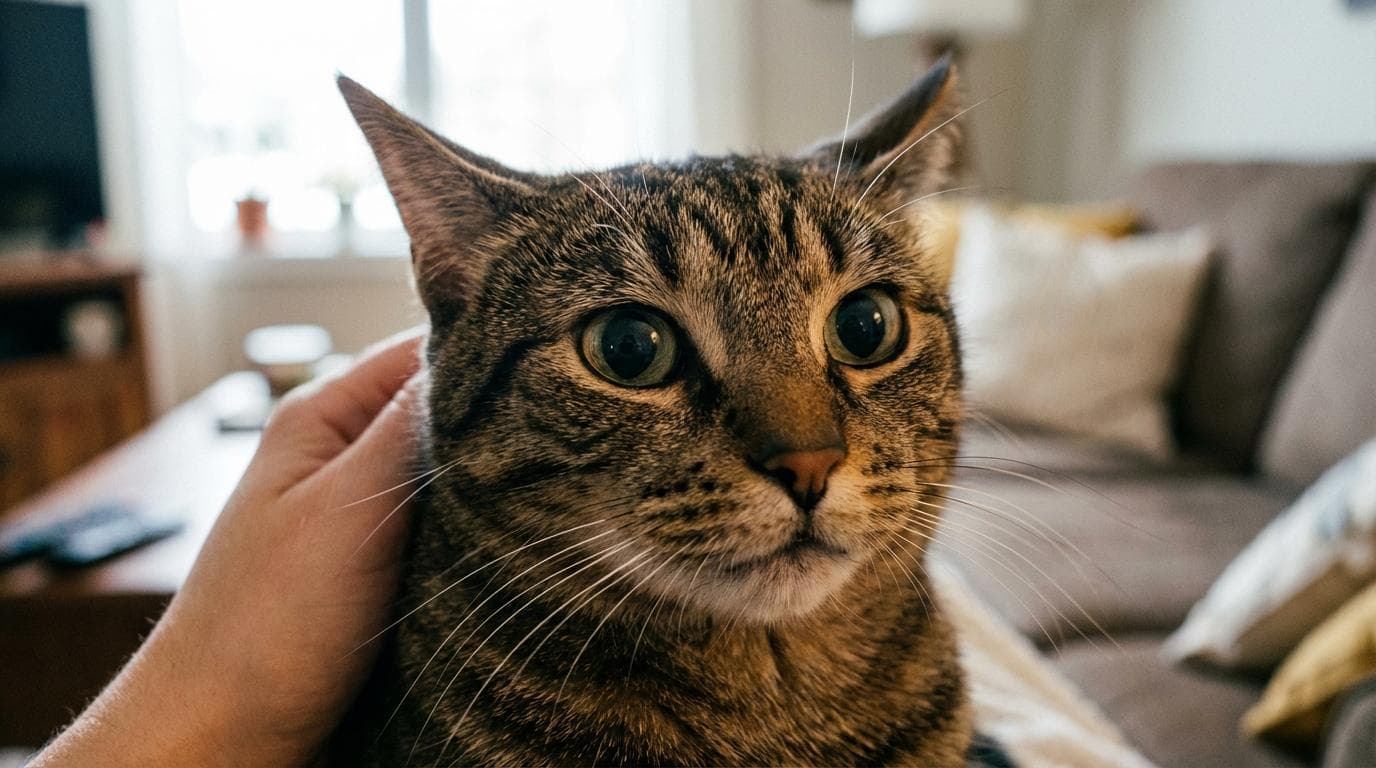
Every cat owner has experienced it: one moment your cat is purring contentedly under your hand, and the next, they whip around and sink their teeth into your fingers. It feels like a betrayal. But if your cat bites when petted, they are not being spiteful or mean. They are communicating the only way they know how. Understanding petting aggression in cats, also known as overstimulation aggression, is the key to building a relationship where your cat actually enjoys being touched.
This behavior is especially common in cats who fit the Overstimulated Hunter archetype. These are cats with heightened sensory awareness, strong prey drives, and a nervous system that processes touch differently than we might expect. The good news is that once you understand what is happening beneath the surface, those sudden bites become entirely predictable and preventable.
What Actually Happens When Your Cat Gets Overstimulated
Cats have an extraordinary density of nerve receptors in their skin, particularly along the back, base of the tail, and belly. What starts as a pleasant sensation can quickly cross a threshold where the same repetitive stroking becomes irritating or even painful. Think of it like someone tapping you on the shoulder. Once or twice is fine. Fifty times in a row becomes unbearable.
When a cat reaches this threshold, their nervous system essentially flips a switch. The pleasurable petting has activated too many nerve endings, and the sensation shifts from comfort to discomfort. Your cat has not suddenly decided to be aggressive. Their body has simply had enough stimulation, and biting is their emergency stop button.
This threshold varies dramatically between individual cats. Some cats can be petted for twenty minutes without issue. Others reach their limit in under sixty seconds. The Overstimulated Hunter type tends to have a particularly low threshold because their nervous system is already running at a heightened state of alertness. They are wired to respond quickly to sensory input, which makes them incredible hunters but also makes them more reactive to sustained touch.
The Warning Signs You Are Probably Missing
Here is the critical insight that transforms this relationship: cats almost always give warning signals before they bite. The problem is that most owners either do not know what to look for or dismiss the early signs because the cat seems fine.
Watch for these escalating signals:
- Skin twitching or rippling along the back, especially near the tail base
- Tail movement shifting from slow, relaxed swaying to quick flicking or thumping
- Ears rotating backward or flattening against the head
- Pupils dilating suddenly from relaxed slits to wide circles
- Whiskers pulling forward and becoming rigid
- The purring stops abruptly, even if your cat remains still
- A subtle tension in the body, as though the muscles are coiling
- Head turning toward your hand with a fixed, focused gaze
Many owners report that their cat bites without warning. In almost every case, the warnings were there. The cat was communicating clearly. We simply were not fluent in their language yet.
How to Pet a Cat Who Bites
Changing your approach to petting can dramatically reduce or eliminate overstimulation bites. The goal is to work within your cat's tolerance window rather than pushing past it.
Start by identifying your cat's safe zones. Most cats prefer being touched on the cheeks, chin, and the area between the ears. These regions have fewer of the nerve receptors that trigger overstimulation. The belly, base of the tail, and lower back are the highest-risk zones for most overstimulated cats.
Use shorter petting sessions. Instead of long, continuous strokes down the body, try brief chin scratches lasting ten to fifteen seconds, then pause. Watch your cat's response. If they lean in, nudge your hand, or slow-blink, you can continue. If they remain still or show any of the warning signs listed above, they have had enough for now.
Let your cat initiate and end contact. Place your hand near your cat and let them rub against it rather than reaching out to pet them. When they walk away, let them go. This gives your cat control over the interaction, which is enormously important for cats who are prone to overstimulation.
Vary your touch. Repetitive stroking in the same spot is the fastest path to overstimulation. Alternate between chin scratches, cheek rubs, and brief pauses. Some cats prefer a scratching motion over long strokes.
Never punish a bite. Yelling, spraying water, or pushing your cat away after a bite will make them more anxious and more likely to bite harder and faster next time. They were already overstimulated. Adding a fear response on top of that only worsens the problem. Instead, simply withdraw your hand calmly and give your cat space.
Building a Better Bond With Your Overstimulated Cat
Living with an overstimulated cat is not about accepting less affection. It is about building the kind of trust that actually increases your cat's tolerance over time.
Many owners of Overstimulated Hunter cats discover that their cat becomes significantly more affectionate once the pressure of unwanted touch is removed. When your cat learns that you will respect their signals and stop before they need to bite, they begin to seek out more contact on their own terms. The biting often decreases not because you trained it out of them, but because they no longer feel the need to defend themselves.
Enrichment also plays a major role. An overstimulated cat whose prey drive is satisfied through regular play sessions, puzzle feeders, and environmental stimulation is generally calmer and more tolerant of touch. A cat who is bored and under-stimulated has a nervous system that is already on edge, making the threshold for petting overstimulation even lower.
Try scheduling a fifteen-minute interactive play session with a wand toy before settling down for a petting session. A cat who has just completed a hunt-catch-kill cycle is more relaxed, more likely to seek closeness, and better able to tolerate sustained touch.
Understanding why your cat bites when petted is one of the most important steps you can take as a cat owner. It shifts the dynamic from frustration and hurt feelings to genuine communication and mutual respect. Your cat is not broken. They are not aggressive. They are simply telling you something important about how their body processes touch.
If you are curious about whether your cat fits the Overstimulated Hunter profile or one of the other four feline archetypes, take the quiz to discover your cat's unique behavioral blueprint. Understanding your cat's archetype is the first step toward a deeper, bite-free bond.