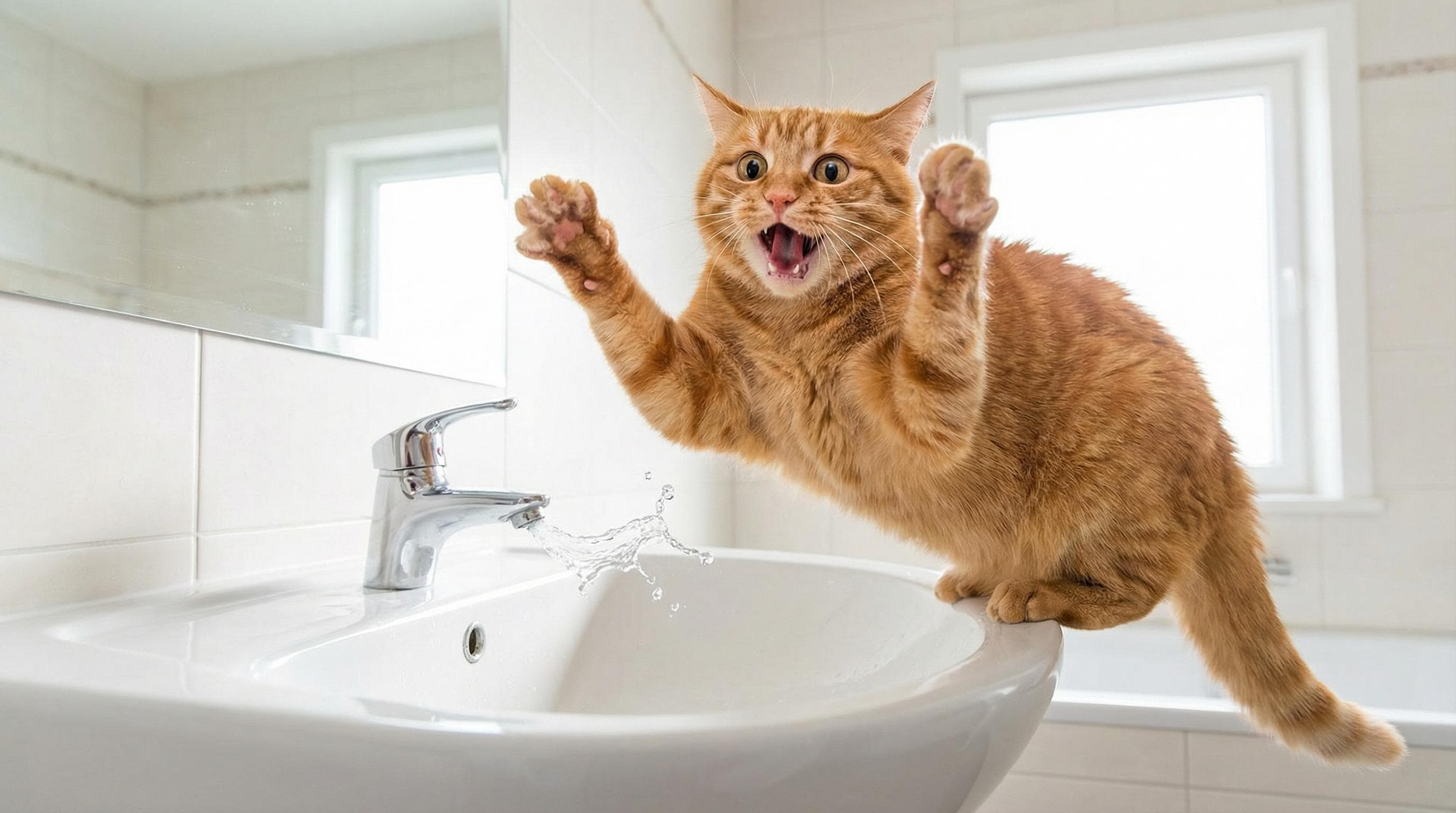
You've seen the videos: a cat encounters water and reacts as if they've been personally offended by its existence. The dramatic leaps, the flailing paws, the look of utter betrayal — cats and water are one of the most famous rivalries in the animal kingdom.
But why? Dogs don't mind water. Many wild animals swim willingly. What is it about domestic cats that makes them treat a splash of water like a life-threatening emergency?
The answer is more interesting than you'd think, and it has everything to do with how cats evolved.
The Evolutionary Explanation
Desert Origins
Domestic cats descended from the African wildcat (Felis lybica), a species that evolved in arid, desert environments in the Near East. Their ancestors rarely encountered large bodies of water and had no evolutionary pressure to become comfortable swimmers.
Compare this to dogs, who descended from wolves — animals that regularly crossed rivers, swam to pursue prey, and lived in environments with abundant water. Dogs had millions of years of evolutionary incentive to be comfortable in water. Cats didn't.
Fur That Doesn't Cooperate
A cat's coat isn't designed for water. Unlike water-resistant dog breeds (Labradors, retrievers), most cat fur absorbs water rather than repelling it. A wet cat becomes heavy, cold, and slow — all things that make them feel vulnerable.
In the wild, a cat who is waterlogged can't hunt, can't flee from predators, and can't regulate their body temperature effectively. Avoiding water wasn't a preference — it was a survival strategy.
Loss of Control
Cats are control-oriented animals. They like to decide when, where, and how things happen. Water — especially running water — is unpredictable and difficult to control. It changes the ground under their paws, alters their balance, and creates sensations they can't predict or manage.
For cats with an Anxious Homebody personality, this loss of control is particularly distressing. These cats already struggle with environmental unpredictability, and water represents everything they find threatening: unfamiliar sensations, loss of footing, and inability to escape quickly.
Smell Sensitivity
Cats have a sense of smell that's roughly 14 times stronger than humans. Tap water contains chlorine and other chemicals that humans can barely detect but cats can smell clearly. That "clean water" might smell terrible to your cat.
Cats That Actually Like Water
Not all cats hate water. Some breeds have genetic affinities for it:
- Turkish Van: Often called the "swimming cat," bred near Lake Van in Turkey
- Bengal: Wild ancestry includes the Asian leopard cat, which hunts in water
- Maine Coon: Water-resistant coat and a history as ship cats
- Savannah: Descended from the serval, an African wild cat that hunts in wetlands
- Abyssinian: Known for playing with water and even joining owners in the shower
Why Your Cat Is Fascinated by Running Water
Here's the irony: many cats who hate being in water are obsessed with watching it. Dripping faucets, running toilets, and water fountains captivate them.
This makes biological sense. Running water is fresher and safer to drink than stagnant water (which can harbor bacteria in the wild). Cats have an instinct to seek out moving water sources. That's why cat water fountains are so popular — many cats drink significantly more water from a fountain than from a bowl.
When You Need to Bathe Your Cat
Most cats never need baths. They're meticulous self-groomers and keep themselves remarkably clean. However, sometimes a bath is necessary:
- Fleas (when topical treatments need supplementing)
- Skin conditions requiring medicated shampoo
- Sticky or toxic substances on their fur
- Senior or disabled cats who can't groom themselves
- Certain show breeds that require regular bathing
How to Make Bath Time Less Traumatic
Preparation is everything:
- Trim their nails first (for your protection)
- Brush out mats and loose fur before getting them wet
- Place a rubber mat or towel on the bottom of the sink or tub for traction
- Use lukewarm water — never hot or cold
- Have everything ready before bringing the cat in (shampoo, cups for rinsing, towels)
- Use a sink rather than a bathtub — it's less overwhelming
- Never submerge your cat. Use a cup or gentle spray to wet and rinse
- Avoid the face entirely — use a damp cloth for face cleaning
- Speak calmly and work quickly
- Have a helper if possible — one person holds, one person washes
- Wrap in a warm towel immediately
- Keep them in a warm room until fully dry
- Some cats tolerate a blow dryer on the lowest, coolest setting at a distance
- Reward with treats and praise
Alternatives to Full Baths
- Waterless cat shampoo (foam or spray)
- Cat grooming wipes
- Damp washcloth spot cleaning
- Professional groomer who specializes in cats
Keeping Your Cat Hydrated
Just because your cat doesn't like water on them doesn't mean they're getting enough water in them. Dehydration is common in cats, especially those on dry food diets.
Encourage water intake by:
- Using a cat water fountain (moving water is more appealing)
- Placing water bowls away from food bowls (cats instinctively avoid water near their food, as a prey carcass could contaminate a water source)
- Using wide, shallow bowls (cats dislike their whiskers touching the sides)
- Adding water to wet food
- Offering multiple water stations around the house
- Keeping water fresh and changing it daily
It's About Their Comfort, Not Your Convenience
Your cat's water aversion isn't stubbornness or drama — it's millions of years of evolution telling them that water is dangerous. Respecting this instinct and working with it rather than against it is part of understanding your cat's fundamental nature.
Every cat's relationship with their environment is shaped by their unique behavioral profile. Take the free cat archetype quiz to understand your cat's personality type and learn how to create an environment where they feel safe, confident, and understood — dry or otherwise.