That rumbling vibration when your cat curls up on your lap is one of the most comforting sounds in the world. Most people assume purring means one thing: my cat is happy. And often, they're right. But purring is far more complex than a simple happiness indicator, and understanding the full range of purring contexts can deepen your relationship with your cat.
How Cats Purr
Before we get into why, let's address how. Despite centuries of living alongside cats, scientists only recently confirmed the mechanism. Cats purr by rapidly vibrating the muscles in their larynx (voice box), which opens and closes the glottis — the part of the throat that surrounds the vocal cords. This happens at a frequency of 25 to 150 Hz, producing that distinctive rumble.
Remarkably, cats purr on both the inhale and exhale, creating a continuous sound. Most other vocalizations only happen during exhalation.
The Many Reasons Cats Purr
Contentment and Happiness
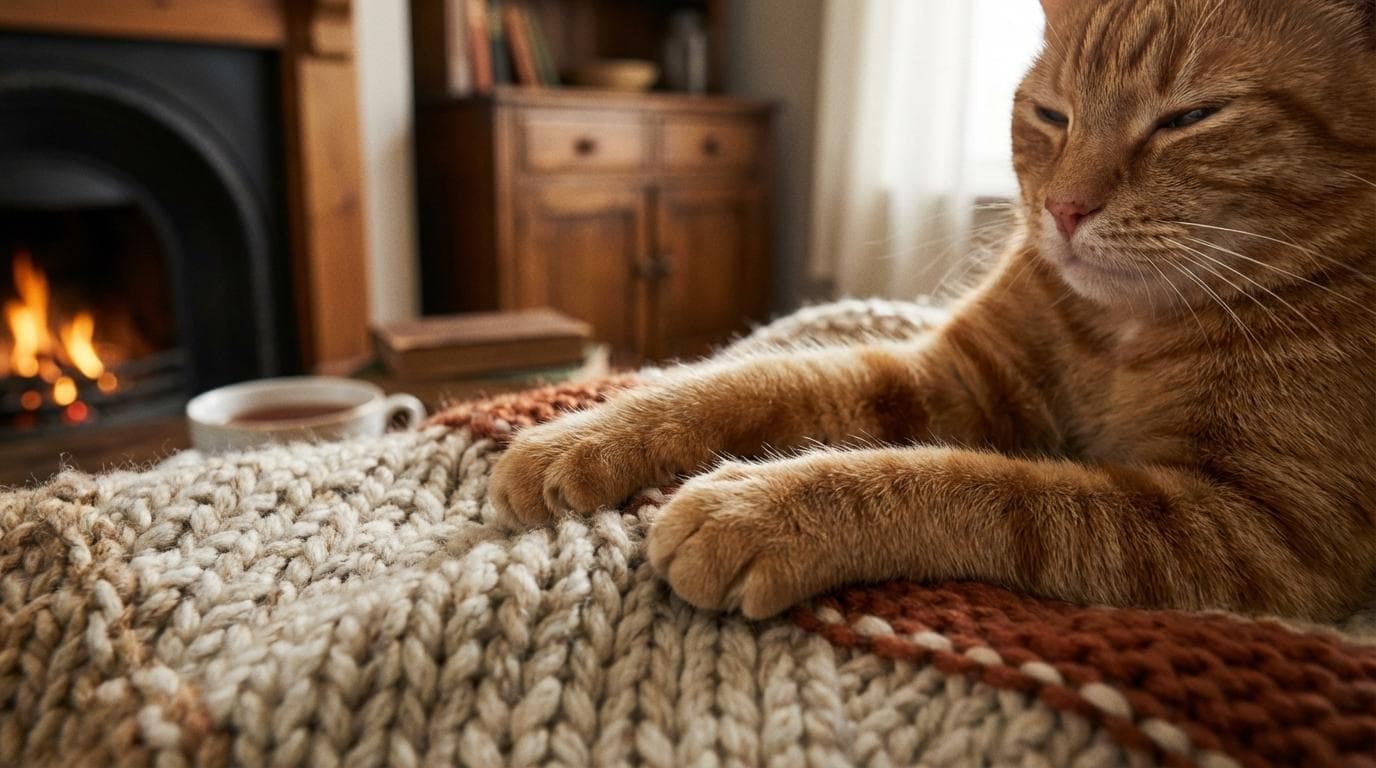
Yes, the obvious one. A cat purring while relaxed on your lap, eyes half-closed, body loose and warm — this is genuine contentment. Context matters: if everything else about your cat's body language says "relaxed and happy," the purring confirms it.
Self-Soothing
Here's where it gets interesting. Cats also purr when they're stressed, frightened, or in pain. This isn't happiness — it's self-medication. Purring releases endorphins (the brain's natural painkillers), and the act of purring itself seems to help cats manage anxiety and discomfort.
If your cat purrs at the vet, during car rides, or when hiding under the bed during a thunderstorm, they're not happy. They're trying to calm themselves down.
Healing
This is one of the most fascinating aspects of purring. The frequency range of cat purring (25 to 150 Hz) overlaps with frequencies that have been shown to promote bone healing, reduce inflammation, and accelerate wound repair in medical research.
Scientists believe cats may have evolved purring partly as a low-energy mechanism for maintaining bone density and tissue health. Cats sleep up to 16 hours a day — without the physical stress of weight-bearing activity, their bones would naturally weaken. Purring during rest may counteract this.
This could also explain why cats recover from bone fractures faster than dogs of similar size, and why orthopedic problems are relatively rare in cats compared to other animals.
Communication With You
Cats have developed a special type of purr for communicating with humans that doesn't exist between cats. Researchers call it the "solicitation purr" — it embeds a high-frequency cry (similar to a baby's cry) within the normal purr frequency.
You've probably heard this and recognized it without knowing what it was. It's the purr your cat uses when they want food, attention, or access to something — slightly more urgent and harder to ignore than their normal contentment purr. Studies show that even non-cat-owners find this purr more urgent and harder to ignore than regular purring.
Cats with the Velcro Shadow archetype often develop especially sophisticated purring communication. Because their bond with their person is so central to their wellbeing, they've refined their purring into a nuanced language that expresses a range of needs and emotions.
Mother-Kitten Communication
Kittens can purr by the time they're a few days old — before they can see or hear well. Purring serves as a vibrational communication channel between mother and kittens. The mother purrs to signal her location and her calm state, and kittens purr during nursing to communicate that they're feeding successfully.
Social Bonding
Cats sometimes purr when they're near other cats they have a close bond with. This appears to be a social signal that says "I'm friendly, I'm relaxed, no threat here." It's the feline equivalent of a human's relaxed smile.
Reading Your Cat's Purr
Since purring can mean very different things, you need to read it in context with other body language:
Happy Purr
- Relaxed body, soft eyes, slow blinking
- Kneading with their paws
- Lying on their side or back
- Seeking contact with you
Anxious or Pain Purr
- Tense body, wide eyes
- Ears flat or rotated back
- Withdrawn or hiding
- Change in eating habits
- Purring at unusual times or in unusual situations
Solicitation Purr
- Directed at you with eye contact
- Usually near food bowl or door
- Slightly higher pitch than normal purr
- Accompanied by rubbing against your legs or meowing
When Purring Stops
If your cat normally purrs during certain activities (being petted, sitting on your lap) and suddenly stops, pay attention. A cessation of purring can indicate:
- Pain in the throat or chest area
- Upper respiratory infection
- Laryngeal problems
- General illness
- Stress or depression
Purring and Your Health
There's growing evidence that living with a purring cat may benefit human health too. Studies have shown that cat owners have a lower risk of heart attack and stroke than non-cat-owners. While this likely involves multiple factors, the calming effect of a purring cat on human stress hormones and blood pressure may play a role.
The vibration frequency of purring falls in a range that is therapeutically used in human medicine for pain relief and tissue healing. Your cat might literally be good for your health.
Understanding Your Cat's Communication Style
Purring is just one channel in your cat's complex communication system. Every cat has a unique combination of vocal, physical, and behavioral signals that reflect their underlying personality archetype. Some cats purr constantly, others rarely. Some have twenty distinct meows, others have two. Understanding your specific cat's communication patterns is key to a strong relationship.
Take the free cat archetype quiz to discover your cat's behavioral profile and learn to read all their signals — not just the purring. When you understand how your cat communicates, you can finally give them exactly what they need.