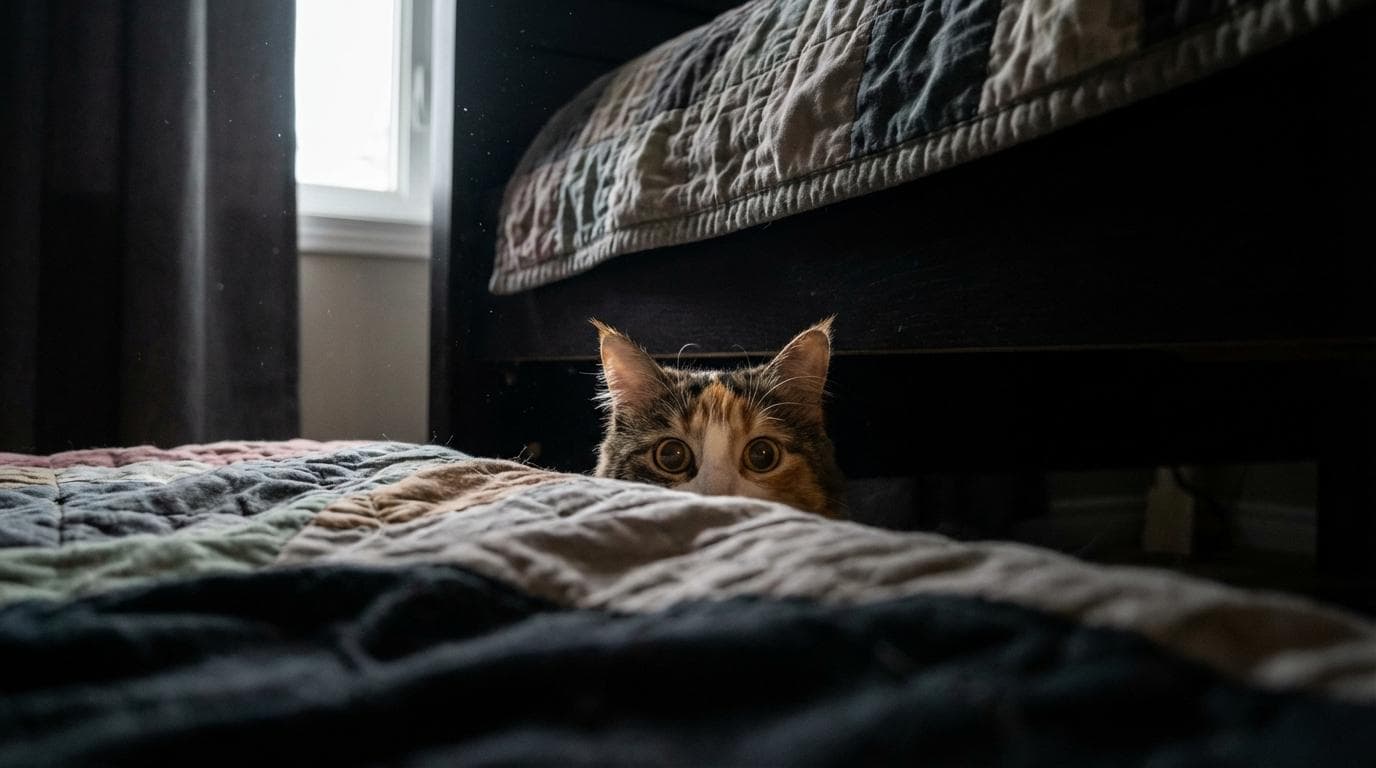
You come home from work and your cat is nowhere to be found. You check under the bed — there they are, pressed against the wall in the farthest corner, watching you with wide eyes. Or maybe your cat disappears whenever guests arrive, only emerging hours after everyone has left.
Hiding is one of the most common cat behaviors that owners worry about, and for good reason. Sometimes hiding is perfectly normal. Other times, it's a red flag. Knowing the difference is essential.
When Hiding Is Normal
First, let's establish something important: all cats hide sometimes, and it's not always a problem.
Natural Instinct
In the wild, cats are both predators and prey. Hiding is a survival strategy baked into their DNA. Small, enclosed spaces make cats feel secure because they can only be approached from one direction, and their back is protected.
Rest and Recovery
Cats sleep 12 to 16 hours a day, and they often seek out quiet, enclosed spaces for their deepest sleep. A cat napping in a closet or under a bed isn't necessarily anxious — they might just prefer the quiet.
Temperature Regulation
Cats seek out warm, enclosed spaces when cold and cool, hidden spots when warm. That box in the corner or the space under your bed might just be the perfect temperature.
Normal Personality Variation
Some cats are naturally more reserved than others. A cat who retreats when visitors arrive but comes out freely when it's just family isn't necessarily stressed — they might just be introverted.
When Hiding Is a Concern
Hiding becomes a problem when it's excessive, sudden, or accompanied by other behavioral changes.
Sudden Increase in Hiding
If your previously social cat suddenly starts hiding more than usual, something has changed. Common triggers include:
- A new pet or family member
- A move to a new home
- Changes in household routine
- Construction noise or home renovations
- A negative experience (being stepped on, a loud noise, a conflict with another pet)
- Illness or pain
Hiding Combined With Other Symptoms
See a vet if hiding is accompanied by:
- Decreased appetite or not eating at all
- Changes in litter box use
- Lethargy beyond normal sleep
- Unusual vocalization
- Aggression when approached
- Visible weight loss
- Changes in grooming (over-grooming or under-grooming)
The Anxious Homebody Pattern
Some cats don't just hide occasionally — hiding is their default state. These cats are often Anxious Homebody types whose entire behavioral profile revolves around seeking safety and avoiding perceived threats.
Signs of an Anxious Homebody:
- They have "safe spots" they retreat to regularly
- They startle easily at sounds or sudden movements
- They take a long time to warm up to new people
- They prefer routine and become stressed by changes
- They may be affectionate one-on-one but withdraw in groups
- They choose covered sleeping spots over open ones
How to Help a Hiding Cat
Never Force Them Out
This is rule number one. Reaching under the bed and pulling your cat out, no matter how gently, destroys trust. It confirms their fear that the world isn't safe and that even their hiding spot can be invaded.
Create Multiple Safe Spaces
Instead of trying to eliminate hiding, give your cat better options. Cat caves, covered beds, boxes with entry holes, and high shelves with walls on three sides all provide security while keeping your cat more visible and accessible.
Place these safe spaces in the rooms where you spend time. The goal is to have your cat hiding in the same room as you, not in a separate room behind a closed door.
Use Food and Play to Build Confidence
Place treats near (not inside) their hiding spot. Over days and weeks, gradually move the treats farther from the hiding spot, rewarding your cat for venturing out. Interactive play with a wand toy near their safe space can also coax them out — prey drive often overrides fear.
Establish Predictable Routines
Anxious cats thrive on routine. Feed them at the same times, play at the same times, and keep household noise and activity as predictable as possible. Surprise is the enemy of a fearful cat.
Use Pheromone Products
Feline pheromone diffusers (like Feliway) release synthetic versions of the calming facial pheromone cats deposit when they rub on things. Place them near your cat's preferred hiding spots and in main living areas.
Gradual Guest Introduction
If your cat hides from visitors, don't force introductions. Instead, have guests sit quietly in a room and ignore the cat completely. Leave treats near where the cat is hiding. Over multiple visits, many cats will gradually emerge on their own terms.
Consider Vertical Space
Some cats hide because they feel vulnerable at ground level. A tall cat tree or wall-mounted shelves in the living room might transform a hiding cat into a perching cat — still observing from a safe distance, but no longer withdrawn behind furniture.
New Cat Hiding: What to Expect
If you've just adopted a cat and they're hiding, this is completely normal. Most cats need a minimum of 3 to 7 days to start exploring, and it can take weeks or months for a truly shy cat to feel comfortable.
Start them in a single room with food, water, litter, and multiple hiding options. Let them come to you on their timeline. Sitting quietly in the room, reading or working, teaches them that your presence is safe and predictable.
Understanding the Root Cause
Hiding is a symptom, not a diagnosis. The same behavior can stem from completely different motivations — fear, illness, personality, environmental stress, or past trauma. Understanding your cat's specific behavioral profile is the key to knowing which approach will actually help.
Take the free cat archetype quiz to identify your cat's behavioral archetype and get targeted strategies for building their confidence and bringing them out of their shell — safely and at their pace.